Key takeaways
- Using any autobuyer breaks EA's rules for Ultimate Team, so the risk is never zero.
- Bans overwhelmingly follow extreme use: all-day running, maximum speed, and coin buying or selling.
- Short sessions at a normal speed, with breaks, look like a keen trader rather than a bot.
- Fast bursts are fine in small doses. It is hours of them, back to back, that gets noticed.
- Stop the moment you see a captcha or a soft ban, and leave the market alone for a while.
How likely is a ban?
Honestly: nobody outside EA knows. EA does not publish ban numbers, does not explain what triggers a review, and changes its thresholds whenever it likes. Anyone quoting you an exact percentage is guessing.
What we can say from what traders report is that bans cluster at the extremes. The accounts that get restricted are usually the ones running a bot all day, every day, at the fastest setting, or mixing an autobuyer with coin buying. Traders who run short sessions at sensible speeds report problems far less often. That is a pattern, not a promise, and it should not be mistaken for safety: our terms are blunt about this, and you should assume any account you use a tool on can be lost.
The sensible way to think about it is insurance rather than odds. Keep sessions modest, keep the account one you could stand to lose, and never put anything on it you would be devastated to see gone.
What actually gets accounts banned
Not all rule-breaking is treated the same. EA's rules for EA SPORTS FC cover several things, and the ones that end accounts fastest are usually nothing to do with search speed:
- Buying coins. Coin purchases are traceable on both sides of the trade and are the single quickest route to a ban. If you do one thing on this page, do not buy coins. We have written about why buying coins is the worst deal in FUT.
- Selling coins or distributing them. Same story, from the other direction.
- Coin transfers. Deliberately losing an auction to move coins between accounts stands out badly.
- Sharing accounts. Logins from places and devices that make no sense together get flagged.
- Automation at scale. Which is where an autobuyer sits, and where pacing actually matters.
An autobuyer that buys twenty cards on a Tuesday evening looks like a keen trader. One that never sleeps does not.
Short sessions beat long ones
The pattern EA can see most easily is a schedule no human keeps. Twelve hours of searching, every day, at exactly the same rate, is not trading behaviour, and no delay setting disguises it.
Two or three sessions of twenty to forty minutes, spread across a day, with hours in between, is a shape that matches how people actually play. It also tends to make more coins, because the market is worth sniping at particular times rather than continuously: our guide to the best times to buy and sell covers when those are.
Set a run time in the extension and let it stop by itself. A run that ends on its own limit is the healthiest thing in your run history.
Search speed, and how to burst safely
Speed is the setting people reach for first and get wrong most. Searching every second for an hour is the clearest bot signature there is, and it also gets you throttled, so you win fewer cards, not more.
Normal is the right default. A gap of three to five and a half seconds, randomised, wins plenty of snipes while looking like someone refreshing a page quickly.
Bursts are fine, in small doses. When a promo drops or the market is moving, turning the speed up for five or ten minutes is reasonable, and it is what a human would do. The rule is simple: short, occasional, and back to normal afterwards. An hour at Very fast is not a burst, it is a pattern.
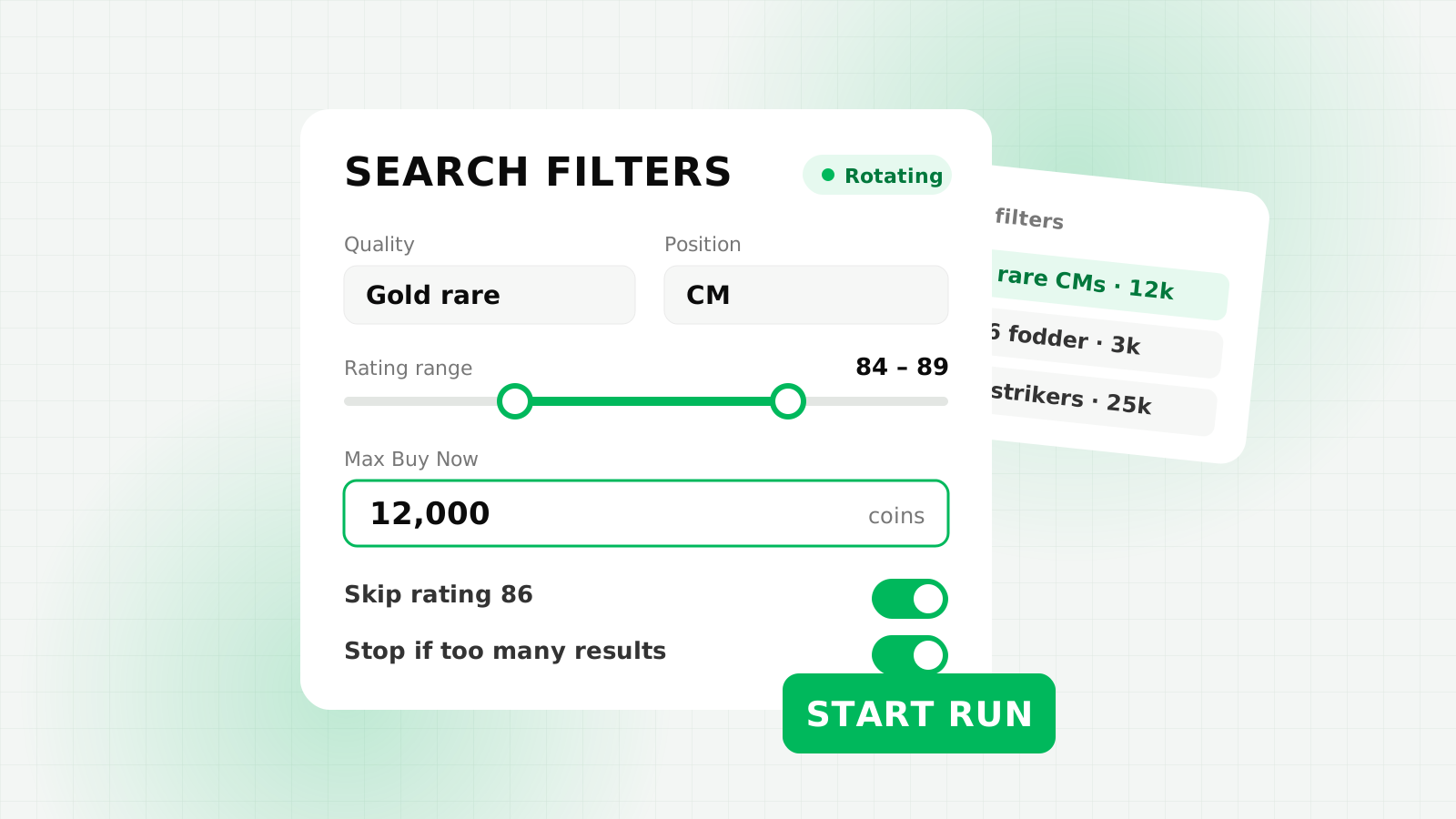
The other half of speed is your filter. A narrow filter finds new listings quickly at a modest search rate, while a wide one needs hammering to be useful. Tightening your filter is the safest way to snipe more: see the filter settings that work and saved filters and rotation.
Breaks, limits and walking away
Breaks do two things. They interrupt the rhythm, and they give the market time to produce new listings worth buying. Leave the scheduled break on and it happens without you thinking about it.
Limits matter for the same reason. A cap on cards bought, a run budget and a coins-to-keep limit keep a session finite, which is the point. Plenty of accounts get into trouble simply because nobody was watching and nothing stopped. Those controls are covered on the safety page.
One more thing that costs nothing: turn on login verification for your EA account. It does not protect you from a ban, but it does protect you from the other way people lose clubs. Protecting your account while trading goes through it.
Warning signs, and what to do
EA rarely goes from nothing to a ban. There are usually warnings, and they are worth taking seriously:
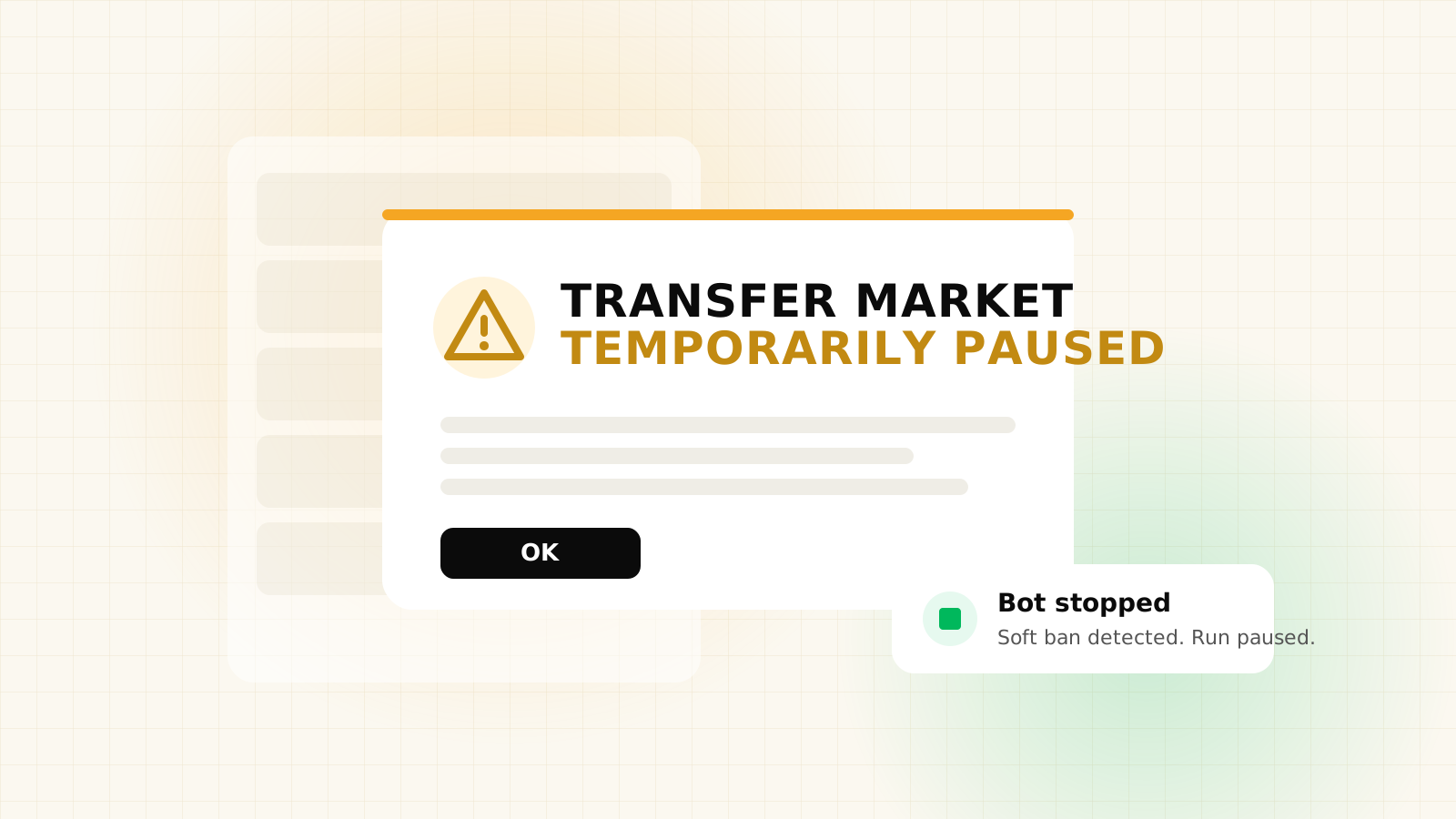
- A captcha. EA wants to see a human. Solve it yourself, then stop for the day.
- Searches returning nothing. A market that answers with empty pages is usually throttling you. More on that in the soft ban explained.
- "Transfer market locked" or repeated errors. Stop and leave it several hours.
Carrying on through any of these is what turns a temporary restriction into a longer one. FC AutoBuyer ends the run by itself on all three, and tells you why, but the decision to come back later is yours.
The short checklist
- Never buy or sell coins. Nothing else on this list matters if you do.
- Run short sessions, a few times a day, not all day.
- Keep search speed on Normal, with quick bursts only when the market is busy.
- Leave breaks on and set a run time, a card limit and a budget.
- Use narrow filters instead of faster searching.
- Stop on a captcha or a soft ban, and leave it for hours, not minutes.
- Turn on login verification, and use an account you could afford to lose.
None of this makes an autobuyer safe. It makes you an unremarkable account instead of an obvious one, which is the only lever any of us actually has. If you want to see how the limits work before you run anything, auto buying and the safety controls are a good place to start.
FAQs
Can EA detect an autobuyer?
EA does not say what it detects. What is visible to them is behaviour: how often an account searches, for how long, how regularly, and whether it ever stops. Pacing and shorter sessions make an account less remarkable, which is the most anyone can do.
Is it safer to snipe by hand?
Sniping by hand does not break EA's rules, so yes, it carries no automation risk. It is also far slower, and rapid manual searching can still get you soft banned.
How long should a session be?
Twenty to forty minutes is a sensible run, a couple of times a day, with real gaps in between. Set the run time in the extension so it ends on its own.
Can I run the fastest speed if I only do it for a few minutes?
A short burst when the market is busy is reasonable. The danger is repetition: the same burst every hour, all day, is a pattern rather than a burst.
If I get a warning, is my account finished?
Not usually. A captcha or a soft ban is temporary and is best treated as a stop sign. Repeatedly working through them is what escalates into a market ban or worse.