Key takeaways
- In the run below, four cards cost 139,000 coins and returned 32,950 profit after tax, about 24%.
- A single 850,000 coin snipe returned 51,550 after tax — more coins, but only 6%. Big snipes tie up your whole balance for a thinner margin.
- EA takes 5% of every sale, not of your profit. A card bought at 9,000 and sold at 10,500 clears 975 coins, not 1,500.
- Sniping pays in volume of small wins, not in one big card.
- Anyone quoting a flat coins-per-hour figure is guessing. It depends on your filter, the hour and what the market is doing.
“How much can you make sniping?” usually gets answered with a screenshot of one enormous card and no mention of what it cost or what EA took. So here are complete numbers from real runs, including the ones that barely paid.
The short answer
On cheap, high-turnover cards, a good filter returns somewhere around 20–30% per flip after tax, and the limit on your earnings is how many flips you can make rather than the margin on each one. On expensive cards the percentage drops sharply, even though the coin figure looks better.
If you want one number: 30,000 to 60,000 coins a day starting out, and 100,000 to 250,000+ once you know what you are doing. The run below shows where those come from — four cards that turned 139,000 coins into 171,950 in part of an afternoon.
A real run: ten cards, 202,850 coins
This is the run history from one session. Ten cards won, nothing missed, 202,850 coins spent:
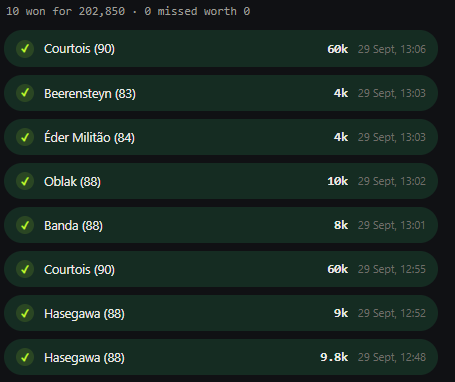
Note the shape of it. One card at 30k, two at 60k, and the rest between 4k and 10k. That is what a normal session looks like: a lot of small cards and the occasional bigger one.
What they sold for
The same cards, on the transfer list after they sold:
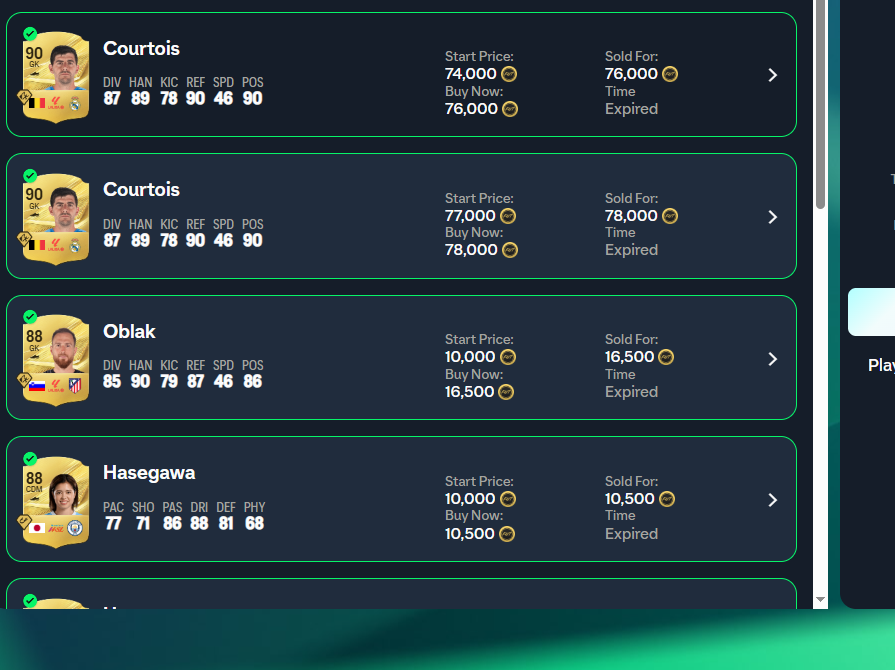
Put the two together and take EA's 5% off every sale:
| Card | Bought | Sold | You receive | Profit |
|---|---|---|---|---|
| Courtois (90) | 60,000 | 76,000 | 72,200 | 12,200 |
| Courtois (90) | 60,000 | 78,000 | 74,100 | 14,100 |
| Oblak (88) | 10,000 | 16,500 | 15,675 | 5,675 |
| Hasegawa (88) | 9,000 | 10,500 | 9,975 | 975 |
| Total | 139,000 | 181,000 | 171,950 | 32,950 |
32,950 coins of profit on 139,000 spent: a return of just under 24%. Note the Hasegawa. Bought at 9,000, sold at 10,500, and after tax it cleared 975 coins. A 1,500 coin margin looked fine and most of it went to EA.
The 850,000 coin snipe that paid 6%
Here is the one that looks most impressive and pays the worst in percentage terms. A 90-rated Pajor, bought for 850,000:
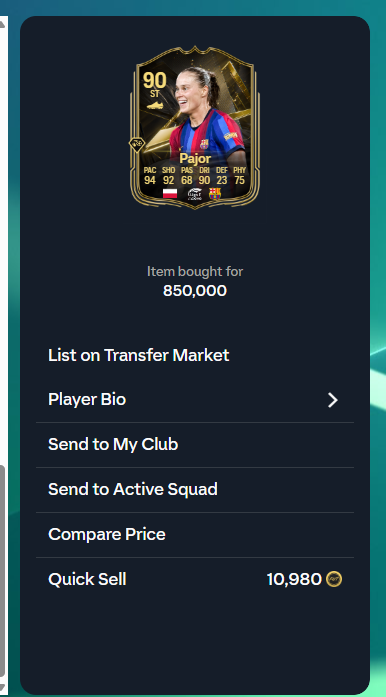
And sold for 949,000:
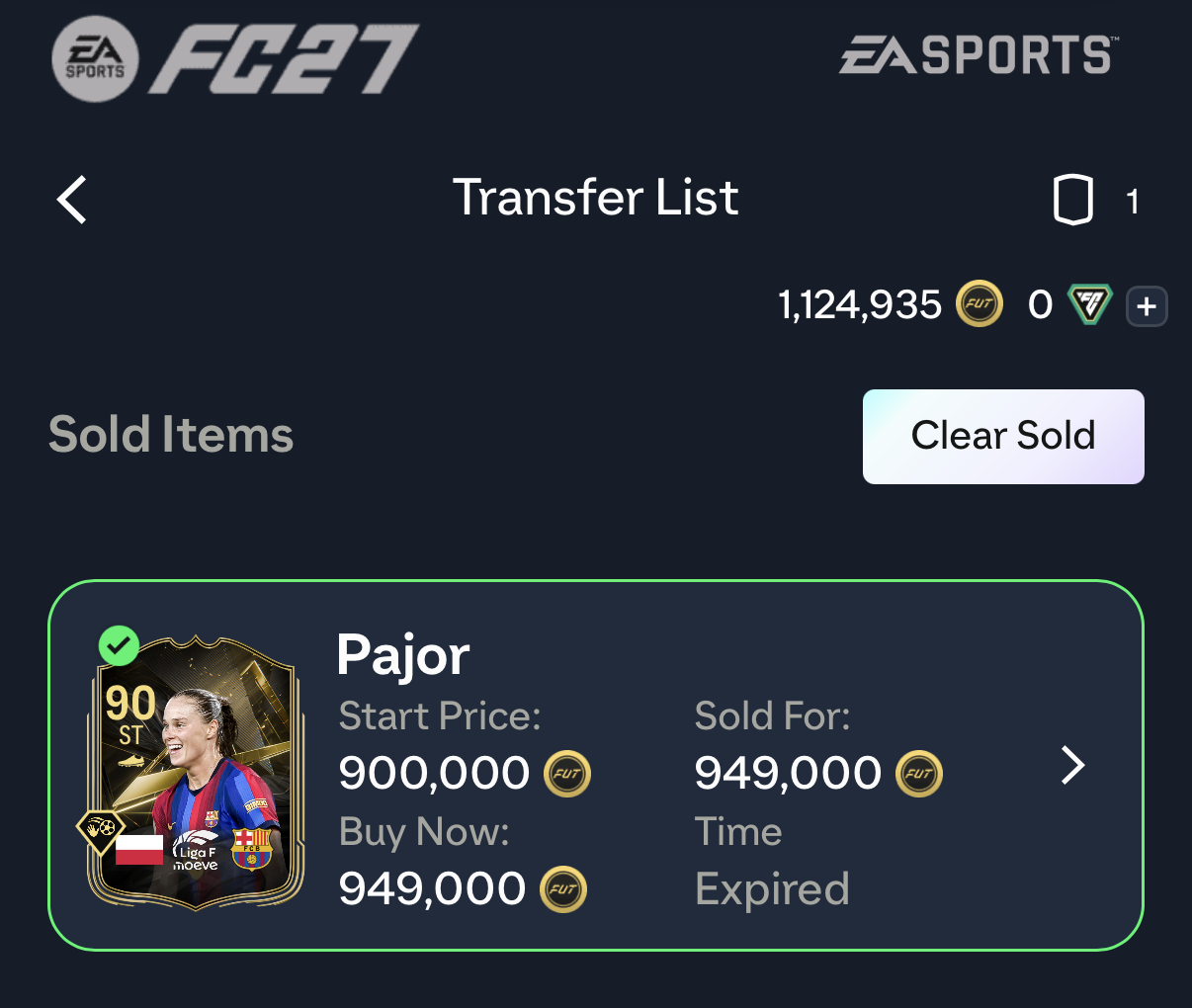
901,550 received, less the 850,000 it cost, is 51,550 coins of profit. More coins than the whole four-card table above. But as a return it is about 6%, against nearly 24% on the cheap cards — and it needed 850,000 coins sitting idle to do it.
This is the thing most trading content gets backwards. Big snipes make better screenshots. Cheap cards make better returns, because you can do them over and over with the same coins.
What is it per hour?
Anyone giving you a flat figure is guessing, so here is how to work out your own instead.
Your hourly rate is average profit per card multiplied by cards won per hour. In the run above the average profit was about 8,200 a card. Win four an hour and that is roughly 33,000 an hour. Win one an hour and it is 8,200.
Cards won per hour is the number that actually moves, and it is set almost entirely by your filter. A filter that returns a full page of results every search will win you almost nothing: the market sorts by time remaining, so a page full of old listings pushes anything listed in the last few seconds onto a page you never see. Tighten it until searches come back empty. Our sniping filters guide goes through it. A filter that comes back empty and then occasionally shows one card is the one that pays.
Be sceptical of any figure quoted without a filter, an hour of day and a date attached to it. The market changes weekly.
What people actually make in a day
Per-flip percentages are the honest way to measure this, but what everyone really wants is a daily number. These are the ranges we see from people running FC AutoBuyer, not a guarantee and not a projection — they are what a day tends to look like at each stage.
| Where you are | Coins a day | What is actually different |
|---|---|---|
| Beginner | 30,000 – 60,000 | One or two filters, copied from a guide, run for a couple of hours. Margins are thin because everyone is using the same filter. |
| Experienced | 60,000 – 100,000 | Filters you worked out yourself, prices you know without checking, and you stop when the market is against you. |
| Expert | 100,000 – 250,000+ | Several filters rotating, trading around promos and content drops, and a feel for when a card is about to move. |
The jump between the rows is not the software. It is the same tool in all three cases. What changes is the filter, the price knowledge and knowing when not to trade — which is why the beginner range is where it is, and why copying a popular filter puts a ceiling on you.
The single biggest lever is reacting to content. When something like Marquee Matchups drops, it needs particular cards, and demand for them shows up within minutes. Whoever adjusts their filter in that window buys at the old price and sells into the new one. Whoever adjusts an hour later is buying at the new price alongside everybody else. That gap — between an SBC going live and the market catching up — is most of what separates the bottom row of that table from the top one.
And luck is a real part of it, which nobody selling you anything likes to admit. The right filter running at the right moment can catch one card that makes 100,000 coins on its own, and no amount of skill arranges that on demand. A good week and a quiet week can differ by more than the gap between two rows above, so judge this over a month rather than an evening.
A beginner at the bottom of that range is still making 30,000 coins in a day they spent doing something else, which is the actual argument for automating it.
What changes the number
- Your filter. By far the biggest factor. See best sniping filters.
- The hour. Quiet hours have less competition for the same cards.
- The week. Promo drops, Weekend League and content releases move prices hard. Our promo trading guide covers the cycle.
- Which cards. Popular meta cards have the thinnest margins because everyone is watching them. Best players to snipe is a start, but the more a filter is shared, the worse it gets.
- Your patience. Selling into a weak market to get coins back quickly is where profits go.
And a few more from the same week, none of them planned:
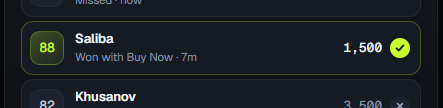
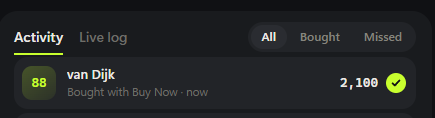
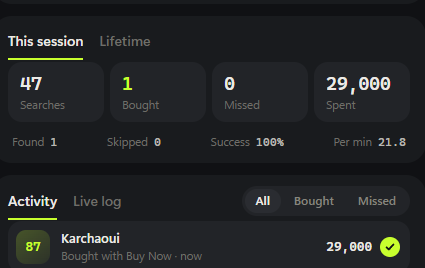
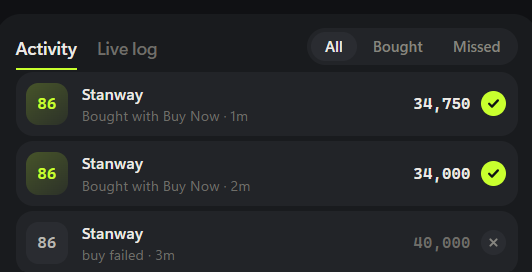
None of those are the big ones. That is a normal afternoon, on a filter anyone can set up, while the tab sits in the background.
Can you do this by hand?
Yes. None of the numbers above depend on software — they depend on buying below market and selling above it after tax. A person with a tight filter does the same flips.
What software changes is the number of cards per hour, because it removes the delay between a card appearing and the purchase being sent. The run above was caught with FC AutoBuyer, our Chrome extension, which watches a filter and buys anything at or under your price. It also refuses to list a card for less than it cost you once the 5% is accounted for, which is exactly the Hasegawa mistake.
Being straight with you: automating the transfer market breaks EA's rules and transfer bans happen. Read how to avoid a ban and decide for yourself. The maths on this page works either way, and the filter advice is free.
FAQs
On cheap, fast-selling cards a good filter returns roughly 20 to 30 percent per flip after EA's 5% tax. In the run shown on this page, four cards cost 139,000 coins and returned 32,950 coins of profit. Your hourly total depends on how many cards you win, which is set mostly by your filter.
It is worth it if you treat it as many small flips rather than one big card. The example on this page shows cheap cards returning nearly 24 percent while an 850,000 coin snipe returned about 6 percent, because expensive cards tie up your entire balance for a thinner margin.
EA takes 5 percent of the sale price, not of your profit. Your sale price needs to beat your buy price by about 5.3 percent just to break even. A card bought at 9,000 and sold at 10,500 clears only 975 coins after tax.
There is no fixed figure. Multiply your average profit per card by the number of cards you win an hour. In the run on this page the average profit was around 8,200 a card, so four cards an hour is roughly 33,000. Cards won per hour depends almost entirely on your filter.
In raw coins, sometimes. As a return, usually not. The 850,000 coin Pajor on this page made 51,550 after tax, which is more coins than four cheap cards combined, but it is only about 6 percent and it needed 850,000 coins free to do it.
No. The profit comes from buying below market and selling above it after tax, and a person with a tight filter does the same flips by hand. An autobuyer increases how many cards you win per hour, but using one breaks EA's rules and risks a transfer ban.