Key takeaways
- Price check first. Your Max Buy Now should come from the current going rate, not from what you paid last week.
- Build one saved filter per card so you can switch between them without rebuilding a search.
- Change the minimum price by one step between searches, or the Web App can hand you the same page again.
- A cheap listing is usually gone in a couple of seconds, so how often you search matters more than how fast you click.
- Both cards are pinned near the top of their price range, so the play is to buy and hold for a range update rather than flip for a few hundred coins.
- When a range updates the market floods. Undercut hard and take the sale, or hold through it for the bounce, but decide which before it happens.
- Neither card is guaranteed to appear at your price during a session. That is normal.
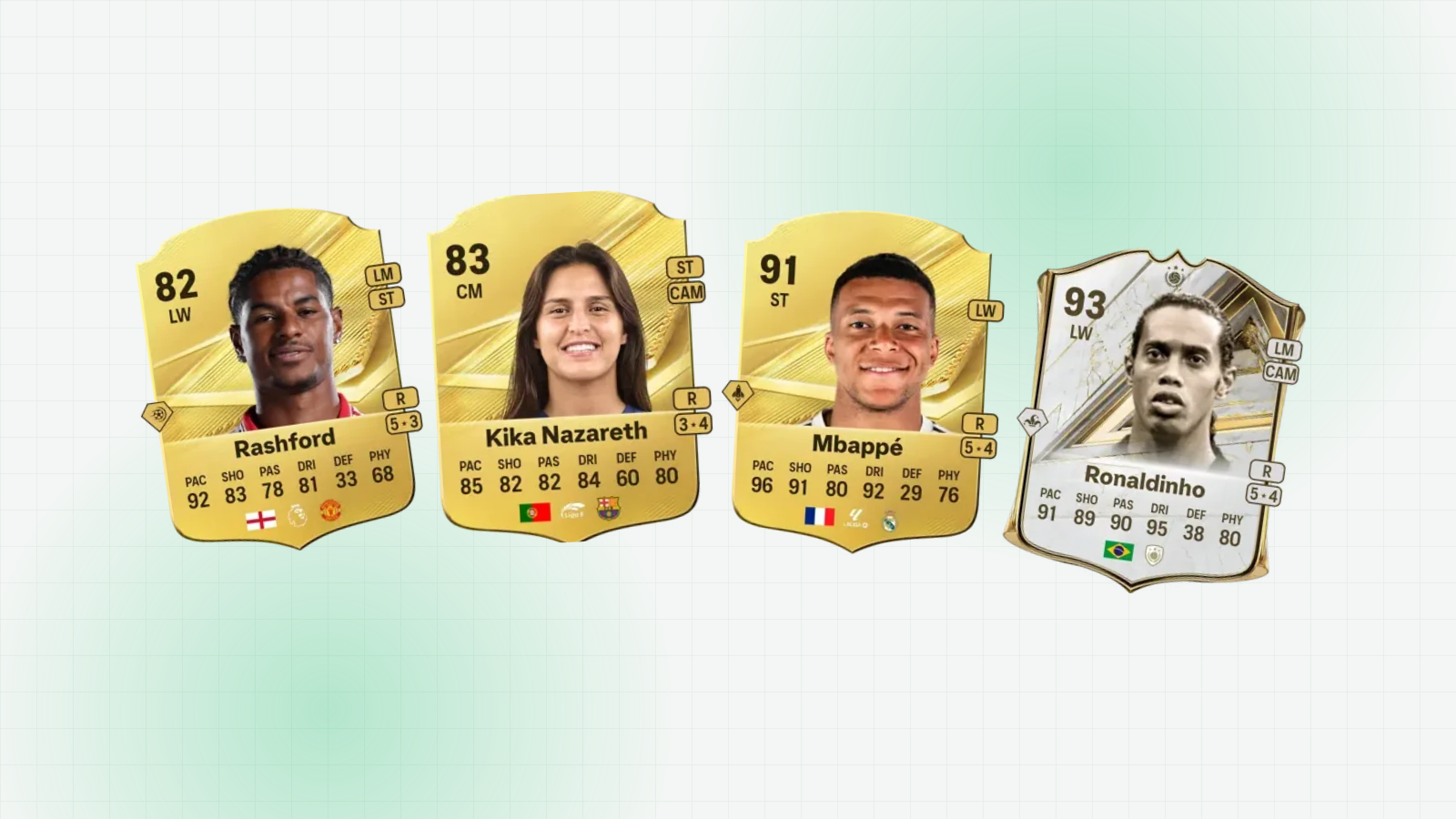
Marcus Rashford and Kika Nazareth are two of the most searched cards in FC 27, for different reasons. Rashford is a recognisable name on a card most people can afford, so there is a steady stream of buyers. Kika Nazareth is a popular link and a common SBC and objective target, which keeps demand high while supply comes and goes.
Where they differ is supply. Kika still gets listed, so you can catch one under the going rate. Rashford has almost nothing on the market, which changes what you are doing when you find one: you are not flipping it, you are keeping it.
Why these two get sniped
A card is worth a filter when three things are true at once.
- People want it. If nobody is buying, a cheap copy is cheap for a reason.
- Copies get listed. You cannot buy what nobody is selling. Thin supply does not rule a card out, but it does mean you are buying to hold rather than to flip, which is the case with Rashford right now.
- The price is pinned or in a band. A card sitting at the top of its price range is a hold. A card with a settled price and plenty of copies listed is a flip. A card that moved 40% this morning is neither, it is a gamble.
Kika is the second kind and Rashford is the first, which is why this guide covers both plays. When a promo lands, prices wobble for a day or two, and we come back to that below.
What both cards cost today
These prices are from 21 September 2026. Check them yourself before acting on any of it. The point of this section is the gap between two numbers, and both numbers move.
- Rashford: around 30,000 coins, with almost nothing listed. Copies get taken as fast as they appear.
- Kika Nazareth: around 10,000 coins.
Those numbers only mean something next to a comparable card. Barcola, a left-sided attacker in the same bracket, sits around 100,000. That does not make Rashford worth 100,000. It does mean a card at 30,000 with barely any supply, sitting next to one at 100,000, is worth a second look.
Kika is the same argument a rung down. Put her next to Pina, and next to the hype Pina carried in last year's game, and 10,000 starts to look cheap.
That changes what you do when you find one. At those prices you are not buying to flip for a few hundred coins. You are buying to hold, and the section below explains what you are holding for.
Find the going rate before you start
The going rate is the lowest Buy Now price copies are actually selling at right now. Not yesterday, and not the number a video quoted last week. Find it in the Web App itself: search the player with no maximum price, sort by Buy Now, and look at the cheapest few listings. That is the market, as it stands, in front of you.
Our guide to price checking players in EA FC goes through this properly, including what to do when the cheapest listings look suspiciously low.
Write two numbers down before you search once more: the going rate, and the most you are willing to pay. If those two numbers are the same, you are not sniping, you are shopping.
Build the filter
In the Web App, go to Transfers, then Search the Transfer Market, and set it up like this:
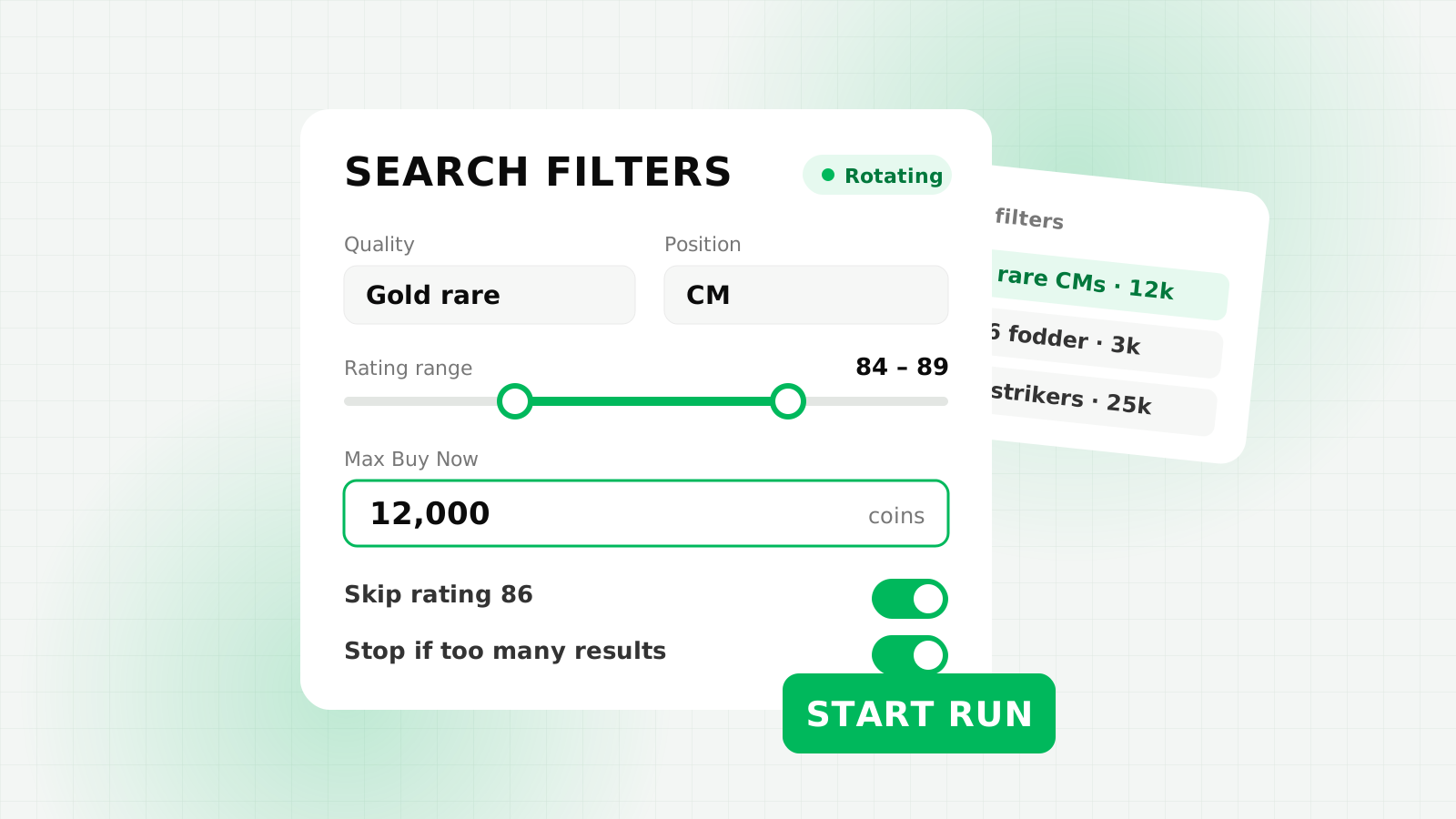
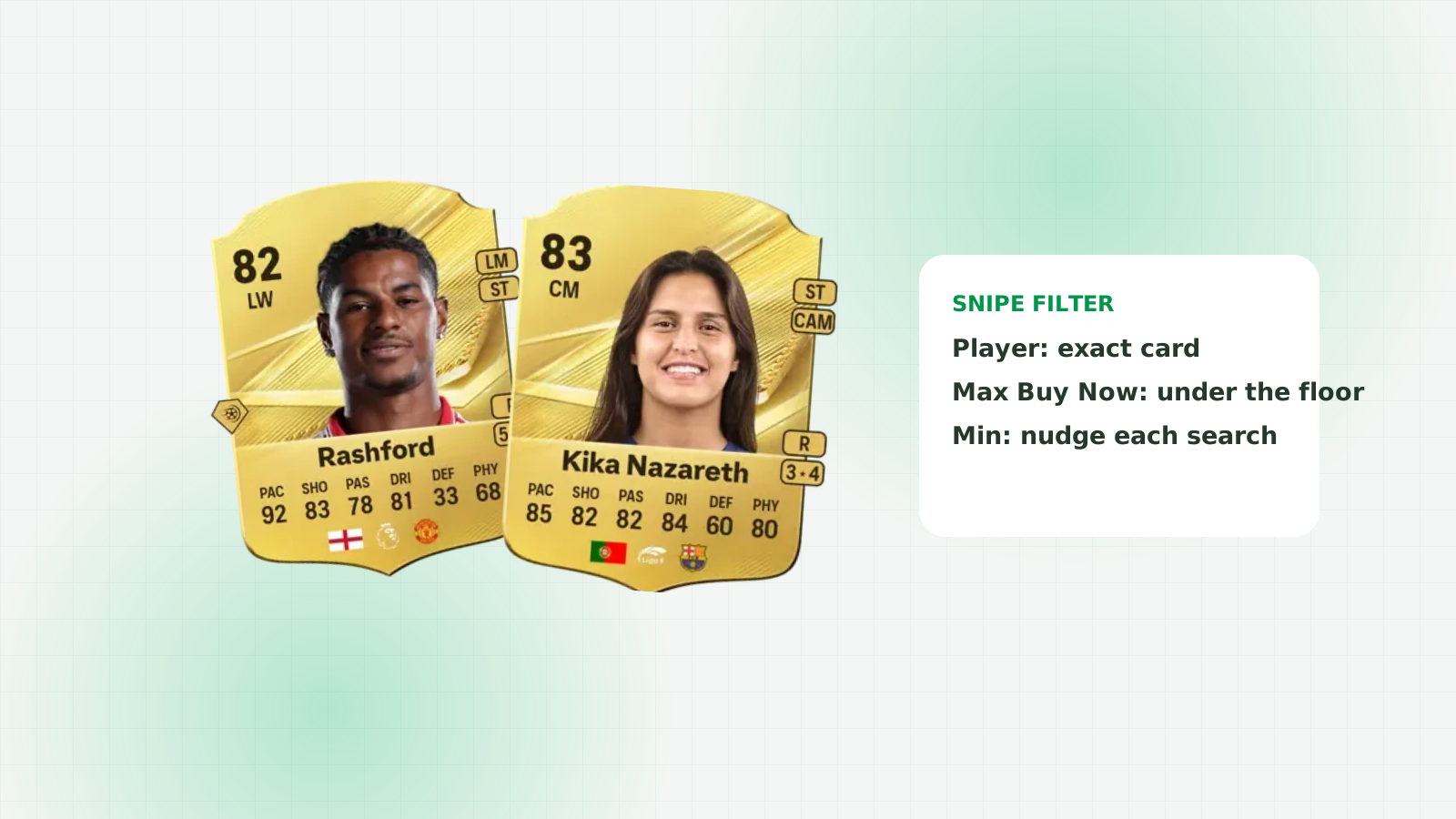
- Player name. Type the name and pick the exact card you want. Both of these players can have more than one version, so check the rating on the card you selected.
- Leave quality, position and league alone. With a player name set, the rest is noise.
- Max Buy Now. Set this to your snipe price. This is the single most important box on the screen.
- Min Buy Now. Set it a little under your max. This is the trick most people miss: it forces the search to return fresh results instead of the same cached page.
- Press Search once. Then keep searching, changing the minimum by one step each time.
Save the filter once it works. Then build the second one for the other card. Having both saved means you can rotate between them rather than retyping a name every few minutes.
Set your Max Buy Now
Pick a price that still leaves a margin after EA takes its 5% cut. If the going rate is 10,000, a copy at 9,000 sells for 9,500 after tax, so you clear 500 coins. That is a real snipe. A copy at 9,800 clears 200 coins and is not worth the transfer slot.
A sensible starting point is 10% to 15% under the going rate. Tighter than that and you will sit there for an hour with nothing. Looser than that and you are buying at the going rate and hoping the market climbs. Our EA tax calculator does the maths if you would rather not.
That is the flip: buy well under the going rate, list it back at the going rate, bank the difference the same day. It works on any card with copies on the market. On a card that is pinned and barely listed, like Rashford at the moment, the second play below is usually worth more.
The buy and hold play
Every card has a price range: a minimum and a maximum EA sets. When a card is wanted and pinned at the top of its range, it goes extinct at that ceiling. People would pay more, and the market will not let them.
EA moves those ranges from time to time. When the ceiling on a card lifts, the price can follow it, and anyone holding copies bought at the old ceiling is suddenly holding something worth considerably more.
That is the whole case for buying Rashford at 30,000 while nothing is listed. You are buying a card that is pinned, sitting on it, and waiting for the range to move. If Kika's range lifts and she settles anywhere near where cards of her profile have sat in previous games, a 10,000 coin card is a different animal entirely.
What it costs you. Coins, locked up, for as long as it takes. That can be weeks. Be honest with yourself about it: EA is under no obligation to update any range, a card can sit where it is for the rest of the cycle, and coins in a card are coins you cannot use for anything else. This is a gamble with a good argument behind it, not a sure thing.
What happens on the day a range updates
Everyone holding sells at once, so the market floods and the price often dips below where you expected it to land. Two sensible responses:
- Undercut hard and take the sale. You will not get the top price, but you get your coins back quickly and can put them into the next card.
- Hold through it. The flood clears as sellers run out, demand catches up with supply, and the price bounces. This needs nerve and more waiting.
What loses coins is doing neither: listing at the price you hoped for, watching it sit there, then panic selling three days later at the bottom. Decide which of the two you are doing before the update lands, not during it.
When to search
Cheap listings appear when supply spikes or when people are careless. In practice that means:
- Right after packs are opened in bulk. Promo release, objective completions and Rivals or Champs rewards all dump copies onto the market at once.
- Late at night and early morning. Fewer buyers watching, so mistakes sit there longer.
- During a crash. When prices fall, people panic sell below the new price. Our guide to market crashes and promo trading covers when those usually happen.
What a promo does to both
A big promo pulls coins and attention towards the new cards, and ordinary golds drift down for a day or two while everyone is chasing the shiny ones. Then the promo cards get used in SBCs, the fodder gets eaten, and prices come back.
That drift is both a risk and an opening. The risk is buying at yesterday's price while the market falls under you. The opening is that the market price itself moves down, so the same filter that returned nothing last week starts filling up. Re-check the going rate at the start of every session during a promo, not just once a week.
Letting software watch for you
Nothing above requires an autobuyer. You can do all of it by hand, and plenty of people do. The problem is that sniping rewards repetition, and people are bad at repetition. After twenty minutes of pressing Search you start missing listings, widening your price, or quitting right before a copy appears.
FC AutoBuyer takes over that part. You build the filter in the Web App exactly as above, press Search once so it can copy the filter, then set your maximum price and start. It searches on a randomised interval, buys any copy at or under your limit, and stops on the limits you set: max price per card, total spend, and a coins-to-keep limit it will not dip below.
Because it runs inside the Web App tab you already have open, there is no app and no relay in between: it calls the market's own Buy Now from the search results. Saved filters rotate automatically, so it can watch Rashford, then Kika, then back again, without you touching it.
FAQs
Work it out from the current going rate rather than a fixed number. Find the cheapest listings in the Web App, then set your Max Buy Now around 10% to 15% under that so there is still a margin after EA's 5% tax.
The Web App can return a cached page for an identical search. Change the minimum Buy Now price by one step between searches and you will get fresh results.
She is in regular demand as a link and an SBC target, and copies get listed often, which is what a snipe needs. Whether it is worth your time depends on the gap between the going rate and what you can buy at on the day.
Give a filter at least twenty to thirty minutes before you judge it. If nothing appears, the usual cause is a Max Buy Now set under what anyone is listing at, not a broken filter.
Every card has a minimum and maximum price EA allows. A card in demand gets pinned at its maximum and goes extinct there. When EA lifts that maximum, the price can climb, which is why traders buy pinned cards and hold them.
At around 30,000 coins with almost nothing listed, he is a hold rather than a flip. A flip needs copies on the market and a gap between your buy price and the going rate. A pinned card gives you neither, but it does give you a card that can only really move one way if the range lifts.
Until the range updates, which can be weeks, and might not happen at all. Only hold with coins you are not going to need, and treat anything you are holding as spent until it sells.
Not in one search. The market takes one filter at a time. Save a filter for each card and rotate between them, which FC AutoBuyer can do automatically every set number of searches.