Key takeaways
- SBC fodder is any card valued mainly for its rating, used to hit squad rating requirements in SBCs.
- Fodder prices tend to fall when pack openings add supply and rise when demanding SBCs appear.
- Buying across several rating bands spreads your risk; buying everything in one band concentrates it.
- Every sale loses 5% to EA tax, so small margins can vanish. Work out profit after tax before you buy.
- Fodder demand is driven by EA's content, which nobody can predict with certainty.
Squad Building Challenges eat cards. Every time EA releases an SBC that asks for a high team rating, thousands of players go looking for the cheapest cards that will get them over the line. That steady, rating-driven demand is what makes SBC fodder trading such a popular approach in EA FC Ultimate Team.
This guide explains what counts as fodder, why its price moves, when traders tend to buy and sell, and how to work out whether a trade is worth it once EA takes its cut. The same principles have applied since the FIFA Ultimate Team days, and they still hold in FC 27.
What is SBC fodder?
"Fodder" is the nickname for cards that players buy to submit in SBCs rather than to play with. The card's rating matters far more than who the player is, what position he plays or how good his in-game stats are.
There are a few broad types:
- High-rated fodder: the cheapest cards at each of the higher gold ratings. These are what players use to reach demanding team rating requirements, and they are the main focus of fodder trading.
- Special fodder: cheap special cards such as older in-form or promo items that meet an SBC's rating or card-type requirement.
- Requirement fodder: cards from a specific league, nation or club that an SBC asks for, where the requirement drives demand more than the rating.
Because fodder is chosen almost entirely by rating, prices for cards of the same rating tend to move together. That makes the market easier to read than for individual meta players.
Why fodder prices move: SBC demand and pack supply
Fodder prices are a tug of war between two forces.
Demand from SBCs
When EA releases a popular SBC, particularly one with a valuable reward and a high team rating requirement, demand for high-rated cards jumps. Players buy the cheapest cards at the ratings they need, and those prices tend to rise quickly. Bigger promos often come with several demanding SBCs at once, which can push fodder up across the board.
Supply from packs and rewards
Every pack opened in FUT adds cards to the market. Reward days, big pack promotions and the start of major promos all tend to bring a wave of high-rated golds. With more copies listed, prices usually soften.
How team rating maths shapes demand
Squad rating in SBCs is not a simple average. Higher-rated cards pull the rating up more, so players often mix a few higher-rated cards with cheaper ones to hit a target. This is why demand is rarely spread evenly: some rating bands get hit much harder than others, depending on what the latest SBCs require. Squad-building tools on sites such as FUTBIN and FUT.GG show the cheapest combinations players are likely to be using.
When to buy and sell fodder
Timing is where most of the edge in fodder trading comes from. The patterns below are tendencies, not rules, and they change as EA adjusts its content.
| Situation | Typical effect on fodder | What traders often do |
|---|---|---|
| Reward days and big pack openings | More high-rated cards listed, prices soften | Buy gradually |
| Quiet spell with no demanding SBCs | Demand eases, prices drift | Buy selectively and hold |
| New SBC with a high rating requirement | Demand jumps at the ratings needed | List matching cards |
| Start of a major promo | Supply from packs and demand from SBCs both rise | Watch closely before acting |
| Late in the season | Better cards become common, fodder values change | Keep holdings small |
For the wider weekly rhythm of the market, see our guide on the best time to buy and sell. Big events can override these patterns entirely, which we cover in trading market crashes. A crash is often when fodder is cheapest, and the SBCs that follow many promos are often when it recovers.
How to trade SBC fodder step by step
- Pick your rating bands. Choose a few ratings you want to trade rather than just one. It spreads the risk if demand for a particular band never arrives.
- Price check the cheapest cards at each rating. Look at the lowest current listings and recent price history, not a single figure. Our guide on how to price check players shows how.
- Set a buy price with room for tax. Decide the most you will pay, knowing you will lose 5% when you sell.
- Buy steadily, not all at once. Picking up cards over time avoids buying everything at a short-term peak.
- Store cards sensibly. Keep fodder in your club if you might use it, or on your transfer list if you plan to sell. Mind your club and list limits.
- Sell into demand. When a demanding SBC appears, list in batches and consider shorter listing durations while buyers are active.
Fodder profit after tax: a worked example
The 5% EA tax is where many fodder trades quietly lose money. The numbers below are purely illustrative, not current prices, but the maths is the same for any card. For a full breakdown, read our EA tax explained guide.
| Example | Bought for | Sold for | EA tax (5%) | You receive | Profit |
|---|---|---|---|---|---|
| A | 9,500 | 11,000 | 550 | 10,450 | 950 |
| B | 9,500 | 10,000 | 500 | 9,500 | 0 |
| C | 20,250 | 22,000 | 1,100 | 20,900 | 650 |
Example B shows the trap: the card went up in price, but after tax you have simply broken even. A useful rule of thumb is that your sale price needs to be comfortably more than about 5.3% above your buy price just to cover the tax, and our EA tax calculator works the figures out for you.
Fodder trading with an autobuyer
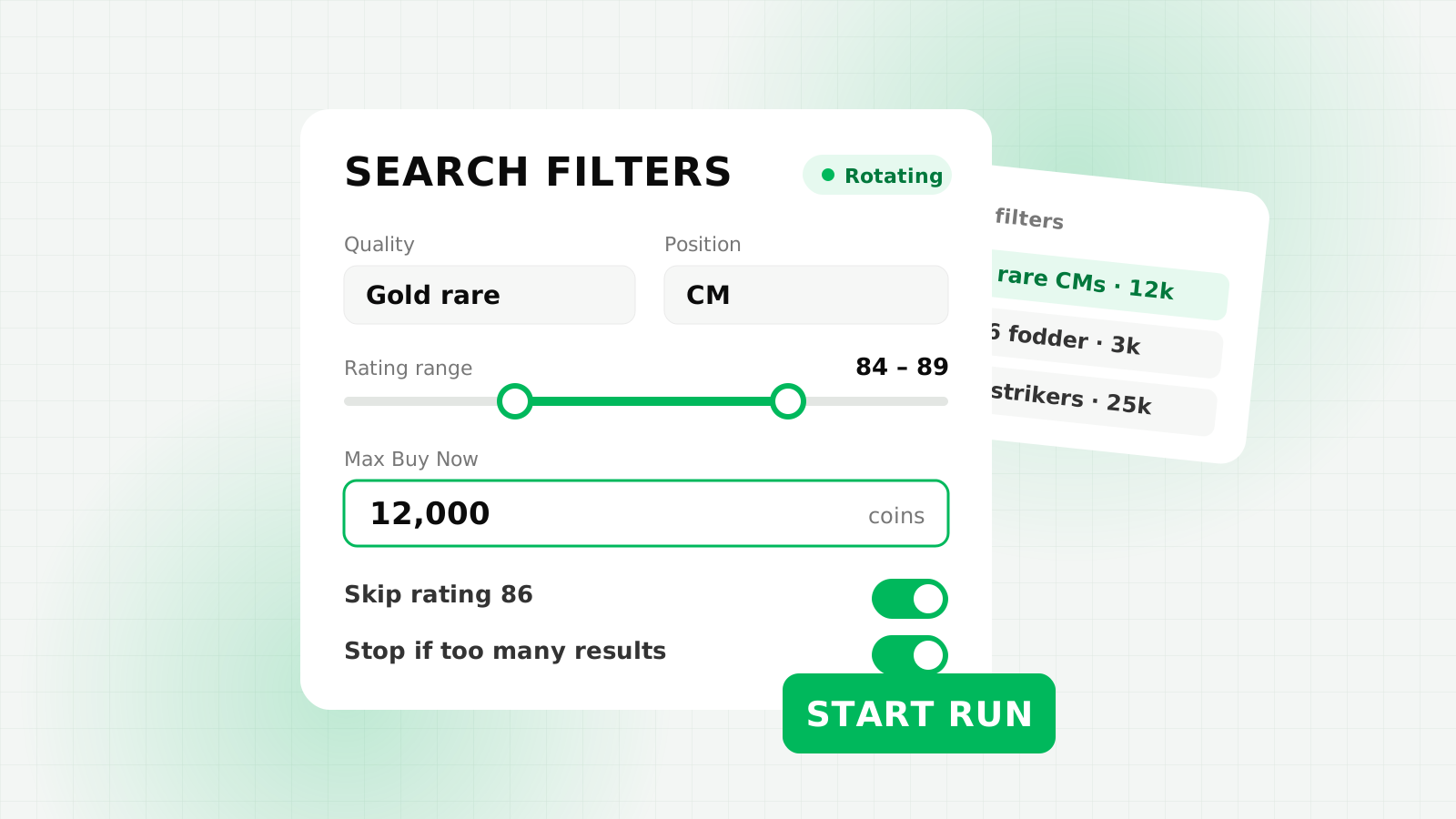
Fodder trading is repetitive by nature: lots of similar cards, bought one at a time, at prices that only make sense below a certain level. That makes it well suited to a Buy Now sniper. Our guide to autobuyer filter settings goes deeper, but the basics for fodder look like this:
- Rating range and a skip list. Target the bands you want and skip any ratings you don't.
- Cheapest-card mode. Buy the cheapest card on each results page up to your per-card limit, which suits fodder where the player barely matters.
- Saved filters with rotation. Rotate between filters for different ratings every few searches.
- Where bought cards go. Send them to your club, transfer list or unassigned, depending on your plan.
- A "stop if more than X cards" rule. If one search suddenly shows lots of cards at or under your price, supply may be flooding in and prices falling, so it pays to pause and reassess.
FC AutoBuyer focuses on buying, so you list and sell cards yourself in the Web App. It costs one price for the year, with every feature included; see our one-price plan for details.
Common fodder trading mistakes
- Going all-in on one rating. If demand shifts to other bands, you are stuck.
- Buying during the SBC rush. By the time a demanding SBC is live, the cheap copies are usually gone.
- Ignoring the tax. A modest rise can leave you with no profit at all, as the worked example shows.
- Holding too long. As the season goes on, better cards become common and the value of older fodder can slip.
- Relying on rumours. Leaked or predicted SBCs do not always appear.
SBC fodder trading rewards patience and discipline more than luck. Understand where supply and demand come from, keep your numbers honest, and you will make better decisions with every trade. Our other EA FC trading guides cover the rest of the market.
FAQs
SBC fodder is any card bought mainly for its rating so it can be submitted in Squad Building Challenges. High-rated golds are the most common type, because they help players hit team rating requirements.
Generally when supply is high and demand is low, such as around reward days and big pack openings, or during a quiet spell without demanding SBCs. These are tendencies rather than rules.
It can be, but EA takes 5% of every sale, so your sale price needs to be more than about 5.3% above your buy price just to break even. Always work out profit after tax before buying.
A Buy Now sniper like FC AutoBuyer can buy cards within a rating range at or under your price, or the cheapest card on each page up to your per-card limit. Using any third-party tool carries a risk of account restrictions.