Key takeaways
- Sniping is the highest return per hour, and the most repetitive. That combination is why people automate it.
- SBC fodder is the steadiest method, because SBCs create demand on a schedule you can see coming.
- Promo flipping pays best when you buy into a crash rather than into hype.
- EA takes 5% of every sale, so a flip has to clear that before it is worth a transfer slot.
- Buying coins is the one method that risks your whole club, and it funds the accounts that get everyone else banned.
There is no secret method. Every coin-making approach in EA FC 27 is a version of the same thing: get a card for less than someone else will pay for it. What changes is how long each one takes, how much capital it needs, and how badly it goes wrong when the market turns.
Here are seven, in the order most people should try them.
1. Sniping
Search a card with a maximum price under the going rate, buy anything that appears, and relist it at the market price. It is the most direct method in the game: the profit is visible the second you buy.
Why it works: cards get listed far too cheap all the time, from a mistyped price to someone who just wants coins now, and extinct cards turn up for whoever is watching. Somebody gets those cards. It may as well be you.
What it costs: attention. A snipe filter needs searching over and over, and the return is directly proportional to how many searches you make.
Where to start: our guide to filter settings and the list of best players to snipe. Then two saved filters and a sensible Max Buy Now.
2. Flipping icons
Icons are a small, fixed pool of cards that everybody wants and nobody packs often. That makes their price move on demand rather than on supply, which is exactly what you want to trade against.
Why it works: icon prices sag whenever the market is distracted — a big promo lands, everyone lists to raise coins for it, and icons drift down. Then an SBC or an objective wants one and the price snaps back. You are buying the dip and selling the spike.
What it costs: patience and a large chunk of coins sitting still. An icon can take days to move, and if you need the coins back in a hurry you will take the hit.
Where to start: pick two or three icons and watch them for a week before you buy anything. Price check at the same time each day so you are comparing like with like.
3. Holographics and informs listed at the wrong price
This is the most reliable underpriced-card method in the game, and it has nothing to do with speed.
Special versions of a card — holographics, informs, anything that is not the base gold — are worth far more than the regular version. But plenty of people quick-list a batch of cards without checking which is which, and price the special one as if it were the base card.
Why it works: it is a mistake people make constantly, because the two cards share a name and the seller is moving fast. You are not competing on reaction time, you are competing on paying attention.
What it costs: you need to know two prices, not one — what the base card goes for and what the special version goes for. Without that you cannot tell a mistake from a fair price.
Where to start: pick a card type, search the special version specifically, and set your maximum at roughly what the base version sells for. Anything that appears is somebody listing it as the wrong card.
4. Gallery cards
The Gallery creates demand for cards that would otherwise be worth nothing, and demand that comes from a collection rather than from squad building behaves very differently.
Why it works: people need specific cards to complete it, not good cards. That pushes prices on low-rated and out-of-the-way players well above what their stats justify, and it keeps doing so for as long as the Gallery is live.
What it costs: the demand has an end date. When the collection stops being the thing everybody is chasing, the prices go back to what the cards are actually worth, and anything you are still holding goes with them.
Where to start: work out which cards the Gallery actually asks for before you buy a single one, then treat it as a short window rather than an investment.
5. Bronze and silver packs
Buy bronze packs, list the contents, keep the consumables and rare bronzes that sell. Slow, boring, nearly risk free, and it works at any coin balance.
Why it works: bronze packs are cheap and bronze cards for squad-building challenges have real demand.
What it costs: a lot of clicking for small margins. It is the method to use when you have 5,000 coins and no starting capital.
Silvers are worth a second look this year. Gallery demand lifts the price of cards that are normally landfill, so silver packs can be worth opening when they would usually be a waste of coins. The same warning applies: it lasts only as long as the demand does.
6. SBC fodder
Squad Building Challenges eat cards. Rated 83, 84 and 85 golds, specific leagues and nations, untradeable-friendly squads. When a big SBC drops, the cards it needs go up because thousands of people need them the same evening.
Why it works: the demand is scheduled. Content lands on a rhythm, and fodder prices follow it.
What it costs: patience and transfer list space. You are buying in the quiet and selling in the rush.
Where to start: the SBC fodder trading guide.
7. Promo flipping
A promo lands, everyone opens packs, the market floods and prices fall. Days later, supply dries up and prices recover. Buying into that dip and selling into the recovery is promo flipping.
Why it works: supply spikes are temporary and predictable. Prices almost always sag on release day and climb once packs stop being opened.
What it costs: nerve, and coins that can sit tied up for days. Not every card recovers, and a follow-up promo can flatten the one you are holding.
Where to start: market crashes and promo trading.
8. Investing before content
Buying cards you expect to be needed later: league fodder before a league SBC, nation cards before a nation promo, high-rated golds before an upgrade.
Why it works: when it works, the margins are the biggest on this list.
What it costs: it is the closest thing to a bet. You are predicting EA's content schedule, and EA is under no obligation to be predictable.
9. Rewards from playing
Rivals, Champs and Squad Battles pay out every week whether you trade or not. Selling what you do not need, rather than opening everything and hoping, is a trading decision in itself.
Why it works: it is free. You were going to play anyway.
What it costs: nothing extra, which is why it should sit under every other method rather than a method on its own.
10. What to avoid
Buying packs to make coins. FC Points are fine for a Season Pass or a Draft entry, but as a way of building a balance they are the worst rate in the game. £8.99 of points is seven packs, and the cards inside are worth a fraction of what the packs cost. We put the numbers side by side in are FC Points worth it in EA FC 27.
Buying coins from a third party. It is the fastest way to get a large balance and the fastest way to lose your club. EA removes bought coins, and accounts that receive them get banned. Beyond the risk to you, those coins are usually farmed from compromised accounts, which is why the whole market gets more restricted every year.
We compared the two properly in buying FC coins vs an autobuyer. The summary: one of them risks your account for coins you did not earn, and the other is trading, which is part of the game.
The ten, ranked
| Method | Coins per hour | Risk | Starting coins needed |
|---|---|---|---|
| Sniping | High | Low, if your limits are set | Low |
| Holographics and informs priced wrong | High per card, rare | Low | Low to medium |
| Gallery cards | Medium, while it lasts | Medium, it ends | Low |
| Flipping icons | Medium | Medium | High |
| SBC fodder | Medium to high | Low | Medium |
| Promo flipping | Medium | Medium | Medium to high |
| Investing | Varies wildly | High | High |
| Bronze and silver packs | Low | Very low | Almost none |
| Rewards | Weekly, fixed | None | None |
| Buying coins | Instant | Your entire club | Real money |
Look down that list and notice what every method has in common: hours. Watching icons for a week. Learning two prices per card. Opening packs one at a time. Playing enough Rivals and Champs to earn the rewards. They all work, and they all cost you an evening.
Here is the alternative, and it takes about a minute to set up: pick a filter, set a maximum price, press start.
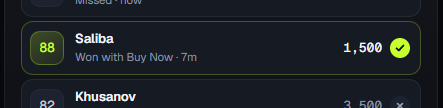
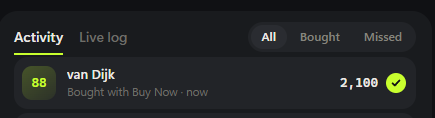
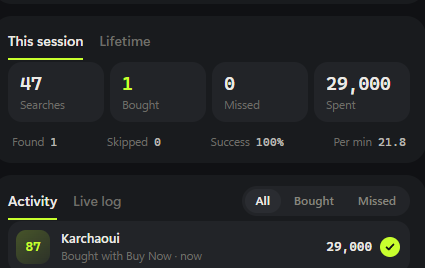
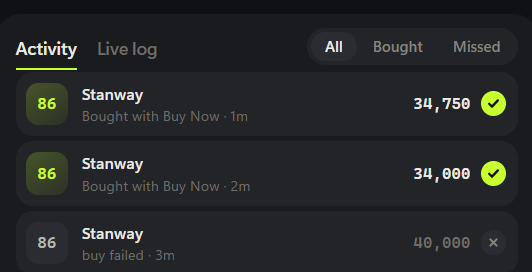
None of those are the big ones. That is a normal afternoon, on a filter anyone can set up, while the tab sits in the background.
Sniping tops the list on return per hour, and that is exactly why it is the method people automate. The work is repetitive, the rules are simple, and the payoff scales with the number of searches rather than with skill.
FC AutoBuyer does that part: your filter, your price, your limits, running in the Web App tab you already have open. It buys at or under the price you set, refuses to start if your listing prices would sell a card for less than it paid once EA's tax is counted, and stops on a captcha, a soft ban or a spending limit.
FAQs
Sniping gives the highest return per hour for most people, because the profit is locked in the moment you buy. It is also the most repetitive, which is why it is the method most often automated.
It depends on the card, the gap between your price and the going rate, and how many hours you put in. A steady filter on a popular card might clear a few thousand coins an hour by hand. Anyone quoting a guaranteed figure is guessing.
No. Sniping cheap golds and the bronze pack method both work from a few thousand coins. Promo flipping and investing are the methods that need capital.
No. EA removes bought coins and bans the accounts that receive them, and being careful does not change how the transfer is detected. It is the one method on this list that risks everything you have built.
Every sale on the transfer market loses 5% to EA. It does not apply to coins from rewards or to cards you keep, but any flip has to clear that 5% before it counts as profit.